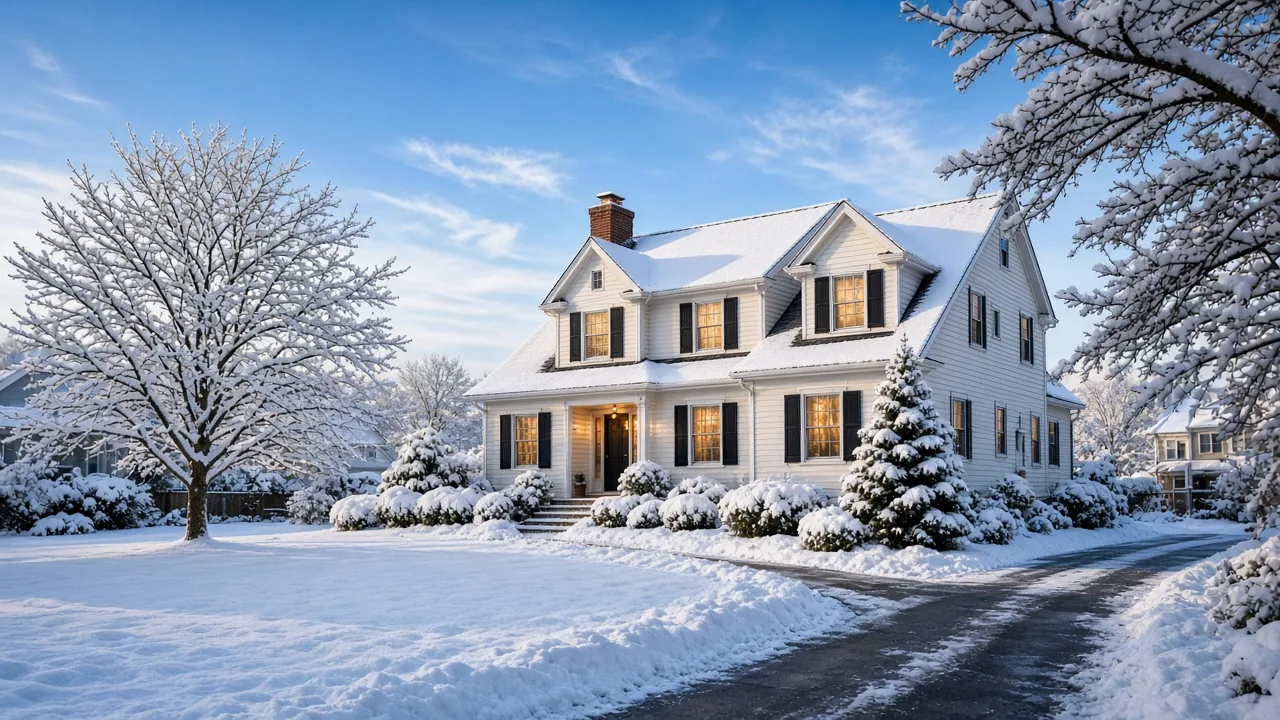
Winter is when a Mount Laurel home earns its keep. South Jersey cold snaps put pipes, roofs, heating, and driveways under real stress, and homeowners who plan ahead avoid the mid-January emergency call. With the median home in the 08054 zip code worth $377,400, a little cold-weather care protects the biggest asset most local families own.
This guide covers the problems that actually show up in Burlington County: frozen pipes in older Southgate and Barclay homes, ice dams on steep Springdale and Holly Hills roofs, sidewalk snow rules, heating bills, and staying safe when a nor'easter knocks out power. It is the winter companion to our fall home maintenance checklist, which handled the pre-winter prep.
12 HRS
To Clear Sidewalks After Snowfall
55°F
Minimum Thermostat for a Vacant Home
20°F
When Dripping Faucets Kicks In
$377,400
Median Home Price to Protect (08054)
How Cold Does It Get in Mount Laurel, and Why Does Winter Matter?
Mount Laurel winters are colder than most newcomers expect: nighttime lows settle into the 20s from December through February, January cold snaps hit the teens, and a nor'easter can drop a foot of snow on Route 38. When temperatures hold below freezing for days, the freeze line drives deeper, unheated spaces get colder, roof snow melts and refreezes, and driveway snow turns to lingering ice. The mid-century ranches and colonials in Southgate and the Country Club sections feel that more than the newer homes in Springdale and parts of Ramblewood.
How Do You Prevent Frozen Pipes During a South Jersey Cold Snap?
A frozen pipe is the most expensive winter surprise a Mount Laurel homeowner can get. Water expands as it freezes, and the burst usually happens at a joint behind a wall, where the leak runs for hours. The pipes most at risk run through unheated garages, crawl spaces, and exterior walls, describing much of the older housing stock in Southgate, Barclay, and the Country Club sections.
- Drip faucets when temperatures are expected to stay in the teens or below 20°F. A slow trickle, one drip per second, keeps water moving in both the hot and cold lines at sinks on exterior walls.
- Open cabinet doors under sinks. On freezing nights this lets warm room air reach the plumbing, with cleaning chemicals moved out of reach of kids first.
- Keep the thermostat at 55°F or higher, always. That includes the weekend away and the week in Florida. For long trips, 60°F is safer, and a neighbor check during a deep freeze is worth it.
- Know where the main shut-off valve is. Every adult in the house should know how to shut the water off at the meter, two minutes of fast action is the difference between cleanup and renovation.
If a faucet gives only a trickle, assume it is frozen. Never use an open flame: warm the pipe with a hair dryer, starting near the faucet. If you cannot reach the frozen section, shut off the main and call a plumber; speed is what keeps this from becoming a homeowners insurance claim.
What Causes Ice Dams, and How Do You Keep Them Off Your Roof?
Ice dams form when heat escaping through the attic melts snow over the warm roof, and the water runs down to the cold eaves where it refreezes, backing up under the shingles and into the attic. Homes with recessed lights, cathedral ceilings, and poor air sealing, common in additions across Ramblewood and Springdale, are the most prone.
- Check the attic for warm spots. On a cold day, feel around light fixtures, vent pipes, and hatches. Warmth there means heated air is escaping and melting the snow above.
- Seal the bypasses. Foam around wires, pipes, and recessed light housings where they enter the attic. This is the fix that actually stops ice dams, more than any roof work.
- Level out thin attic insulation. Around R-38, 12 to 15 inches of fiberglass, is the target here. Patchy insulation lets the heat through in strips.
- Rake snow off the lower roof after big storms. A roof rake from the ground stops the melt and refreeze cycle early. Never chip ice off the shingles, which tears the granules, and never stand on a ladder with a rake.
If a dam already formed, lay a pantyhose foot of calcium chloride ice melter across it to melt a channel for the water, a stopgap, not a cure. The cure is attic air sealing, cheaper than a water-stained ceiling. Buyers pay more for a well-maintained roof, as our Mount Laurel real estate data shows.
Do Mount Laurel Homeowners Have to Shovel Their Sidewalks?
Yes, and the clock starts faster than most people think. Mount Laurel Township's Snow and Ice Removal ordinance, Chapter 127, requires the owner and the tenant of any property abutting a public sidewalk to remove snow and ice within 12 hours of daylight after it falls or forms. If it snows overnight the clock starts at sunrise, so clear the walk by early evening and again after the storm's second half. Owners on steep lots in Holly Hills and the Country Club section often hire the season out to local landscaping companies like Diamond Lawncare on Texas Avenue and Larkin Landscaping on Church Road.
What Is the Safest Way to Clear Driveways and Walkways?
Clearing snow is where winter gets physical, and where the wrong product damages the home: de-icer eats new concrete, burns the grass strip by the walk, and hurts pets' paws.
- Shovel early and often. Fresh snow moves in a fraction of the time: a packed, refrozen foot is a two-hour job, the same storm shoveled twice is 40 minutes.
- Use calcium chloride or a pet-safe blend on walkways. It works in deeper cold than rock salt and is gentler on concrete. Sand or kitty litter adds traction with no chemicals.
- Go easy on rock salt near plants and new concrete. Sodium chloride damages fresh pours and kills the grass strips along Springdale and Ramblewood sidewalks.
- Protect your back and heart. Shoveling wet snow is a known cardiac trigger in older adults. Push, do not lift, take breaks, and hire a local crew for deep storms.
How Do You Keep Heating Bills Down Without Sacrificing a Warm House?
Heating is the biggest line on a Mount Laurel winter bill, and Mount Laurel is PSE&G territory. Comfort and efficiency are the same project: stop the drafts, and the house feels warmer at a lower setting.
- Set the thermostat to about 68°F at home and lower it at night. Each degree dropped over eight hours saves roughly one percent on heating, so a programmable thermostat pays for itself in a season.
- Reverse ceiling fans and clear the baseboards. Fans on low, clockwise, push warm air down, and furniture and curtains away from baseboard heaters let the heat reach the room.
- Use the sun, then close it out. Open south-facing curtains by day for free heat; close them at night to hold it in.
- Change the filter mid-season. A filter packed with November dust makes the furnace labor through the coldest weeks. A fresh one in January is cheap insurance.
If bills still feel wrong, the deeper plays are an energy audit, attic insulation top-ups, and window film on the single-pane sashes common in Southgate. Our energy savings guide covers the New Jersey rebates that make those upgrades affordable.
How Do You Stay Safe During a Winter Power Outage?
Every few winters a nor'easter or ice storm cuts power somewhere in Burlington County, and homes on heavily wooded blocks off Fellowship Road and in the Country Club section see more flickers. The danger is not the cold alone, it is how people try to heat their homes.
- Run generators outside, never in a garage, porch, or basement. Exhaust is odorless carbon monoxide, so place the unit at least 20 feet from doors and windows, clear of snowdrifts.
- Keep space heaters three feet from anything flammable. Curtains, bedding, and the coat pile by the door. Use tip-over shutoff units plugged straight into a wall outlet, never a power strip.
- Test CO and smoke detectors before every storm. New Jersey requires carbon monoxide alarms on every level, and a generator plus a cycling furnace is exactly when they matter.
- Keep a winter outage kit. Flashlights and batteries, blankets, bottled water, a battery radio, phone power banks. Stock it before Thanksgiving, not during the second blizzard.
Two more details: if you leave mid-storm, keep the thermostat at 55°F or higher with a faucet dripping, an empty cold house is exactly how pipes freeze. After snowfall, clear snow from the gas meter and furnace and dryer exhausts, a blocked vent is a carbon monoxide hazard.
How Does Winter Care Protect Your Home's Value?
Buyers shop in every season, and a Mount Laurel home that shows well in January stands out the way one does in May. A plowed driveway, a clear walkway, and a warm entryway tell a spring-market buyer this house was cared for. Do the winter work now and keep the receipts, and you will have the maintenance story a buyer's inspector wants to hear. Buyers, walk the exterior during a snow event and you will learn more about grading and gutters than in any warm-weather tour. To compare which neighborhoods reward that care, our Mount Laurel neighborhood guide covers Ramblewood, Springdale, Barclay, Southgate, Holly Hills, and the Country Club sections in detail.
Frequently Asked Questions
What temperature should I keep my Mount Laurel home when I am away in winter?
55°F or higher. For trips longer than a weekend, 60°F is safer, and it still costs far less than a burst pipe. Never turn the heat off entirely in a New Jersey winter.
When should I let my faucets drip during a freeze?
When overnight temperatures are expected to stay in the teens or below about 20°F, slowly drip both the hot and cold lines at faucets on exterior walls and open the cabinet doors below.
How do I know if I have a frozen pipe?
A trickle or no water, frost on exposed pipe, or running water behind a wall. Thaw near the faucet with a hair dryer, and shut off the main valve if you cannot reach the frozen section.
What causes ice dams on Mount Laurel roofs?
Heat leaking from the attic melts snow over the warm part of the roof; the water refreezes at the cold eaves and backs up under the shingles. The fix is attic air sealing, even insulation, and roof raking, not chipping ice off the roof.
Do I legally have to clear snow from my sidewalk in Mount Laurel?
Yes. Mount Laurel's Chapter 127 ordinance requires owners and tenants of properties with paved public sidewalks to clear snow and ice within 12 hours of daylight after it falls. Public Works enforces it for pedestrian safety.
Is rock salt safe for my driveway and walkways?
Rock salt works on mature concrete but can damage new pours, burn lawns, and irritate pets' paws. Calcium chloride or a pet-safe blend is gentler, and sand adds traction with no chemical risk.
Can I run a space heater safely during a power outage?
Only with a safe power source: keep it three feet from anything flammable, use a tip-over shutoff unit, and plug into a wall outlet or generator, never a power strip.
Build a Routine, Not a Rescue Plan
Winter maintenance is a rhythm, not a single heroic weekend: drip on cold nights, rake after snow, shovel before sunset, change the filter in January, and test the detectors before each storm. Homeowners who keep the rhythm stay comfortable, efficient, and out of the plumber's queue in February.

Bob Millaway
Epique Realty Agent · AI Certified Agent
I help Mount Laurel homeowners understand and protect the value of their homes. If you have questions about your property or the local market, call me at 856.426.1522 or send a message.